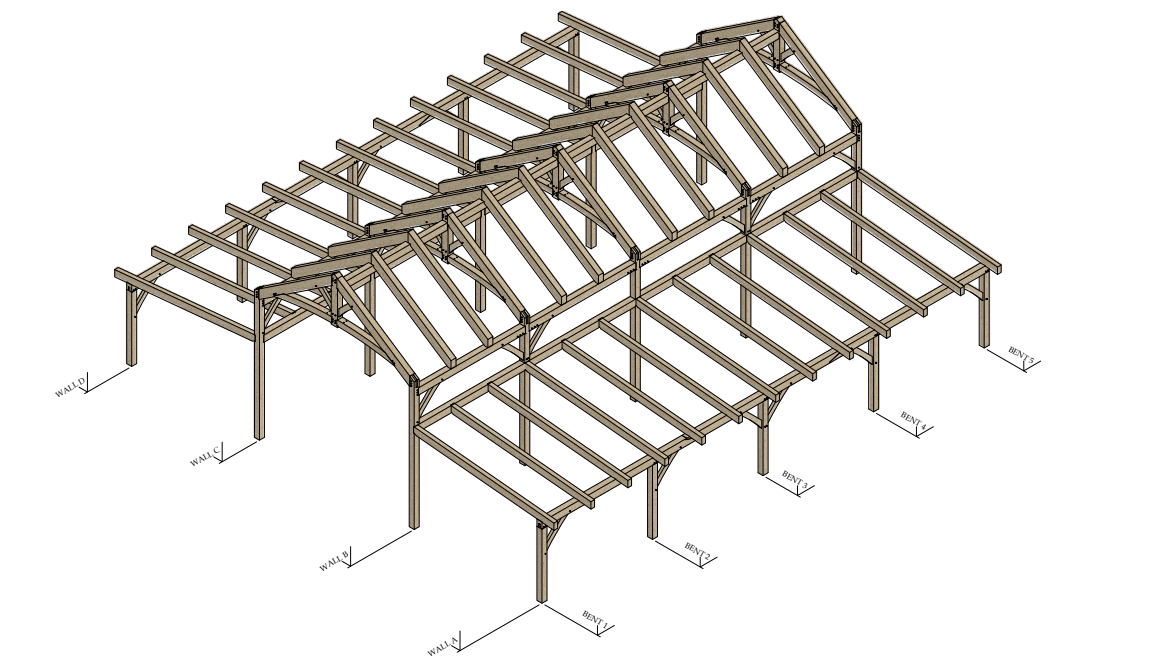
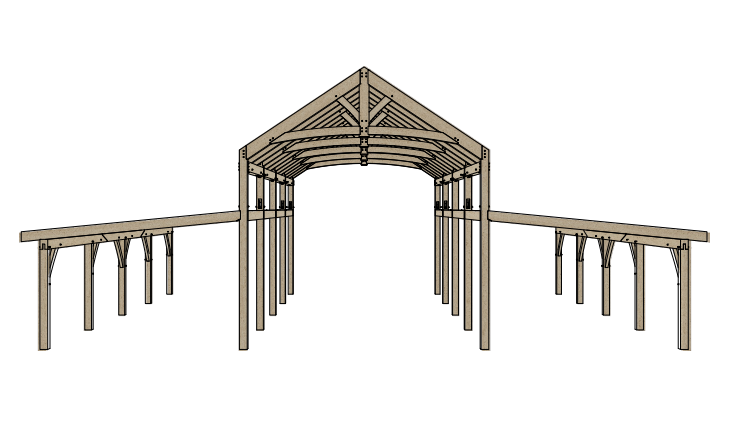
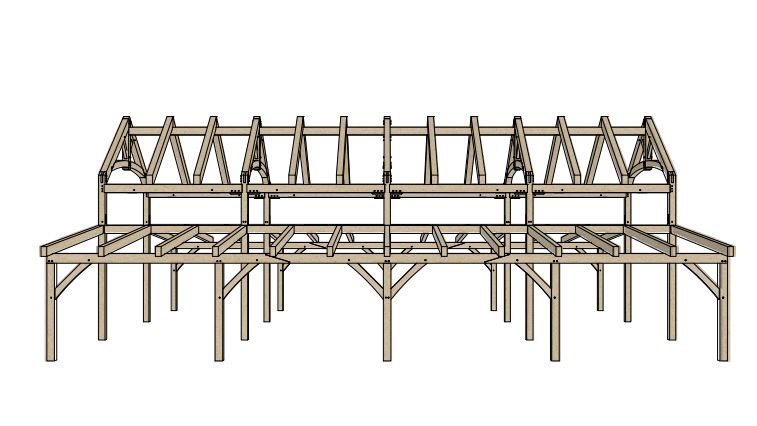
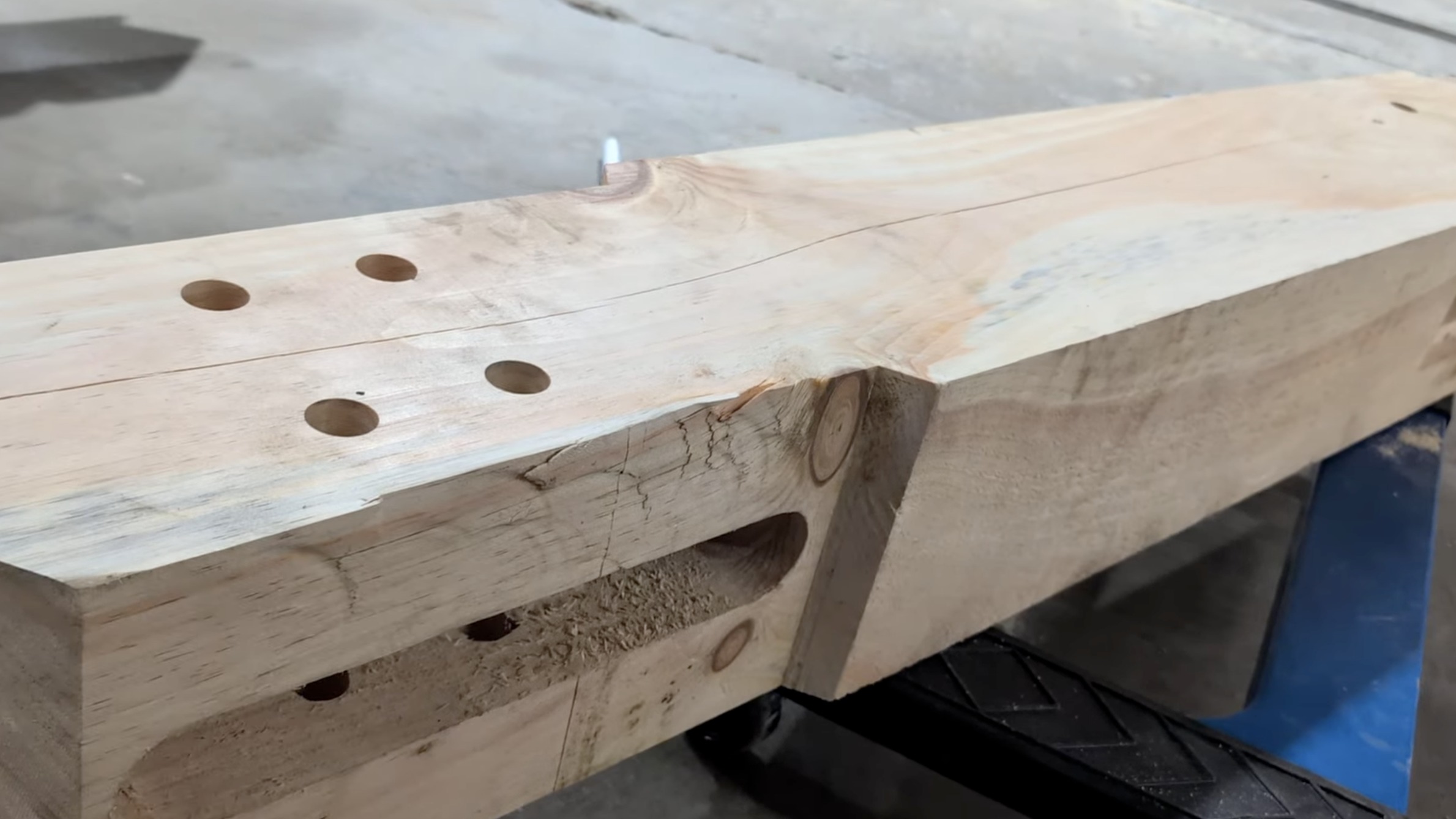
A white oak barn of more than 3,000 square feet, built around king post trusses.
This project was an absolutely massive (more than 3000 square feet) and beautiful white oak barn. White oak is significantly heavier than your traditional Douglas Fir. When moving beams in the shop a forklift is always helpful, but with white oak it’s necessary even with small pieces.
Green white oak beams weigh roughly 1.6–1.7 times as much as the same beams in green Douglas fir. Once both are dry, oak is still about 1.4 times heavier.
To give you some idea of what that’s like, a 10×10 beam that is 20 feet long, in Douglas fir is around 520 lbs, but in White oak it comes in at 875 lbs.
520 lbs
Douglas fir
875 lbs
White oak
Approximate weight of one 10×10 beam, 20 feet long.
We like moving heavy things, but white oak will help you find your limits.
Joinery
White Oak King Post
A king post is the vertical timber at the center of a truss. It runs from the tie beam (the horizontal timber across the bottom) up to the peak, where the two rafters meet. A truss built this way is called a king post truss, one of the simplest and oldest roof trusses in timber framing.
King post trusses suit spans of up to about 30 feet. (For wider spans, framers use a queen post truss, which has two vertical posts set apart instead of one in the middle).
Where the name "King Post" comes from
The name is generally explained by the post’s place in the truss: it’s the single, central and most important post, so it’s “king”. The two posts in the wider queen post truss are thought to have been named later in the same spirit, as the king post’s lesser partners.
The term was in use among English carpenters by the 1700s. The idea itself is older: medieval English roofs had a crown post, a central post on the tie beam that held up a lengthwise beam under the collars rather than reaching the peak. The exact origin of “king” isn’t recorded, so the “chief post” explanation is the best-supported account rather than a certainty.
In the shop
Test fitting before shipping
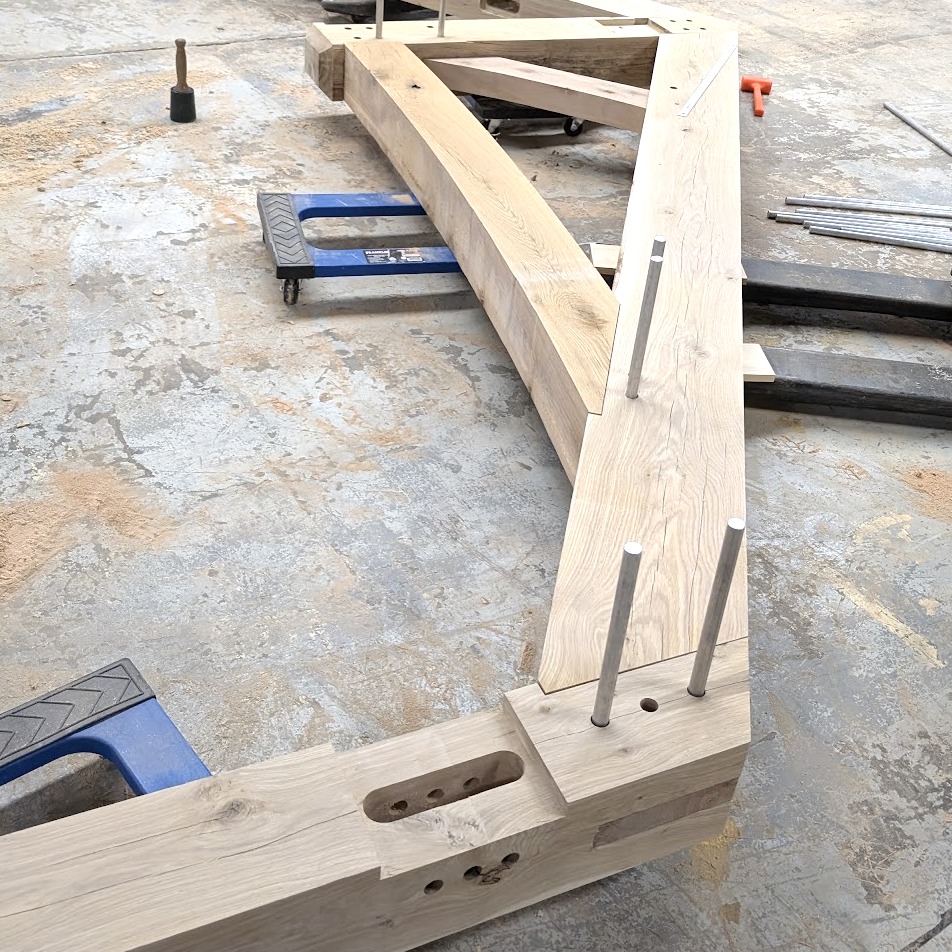
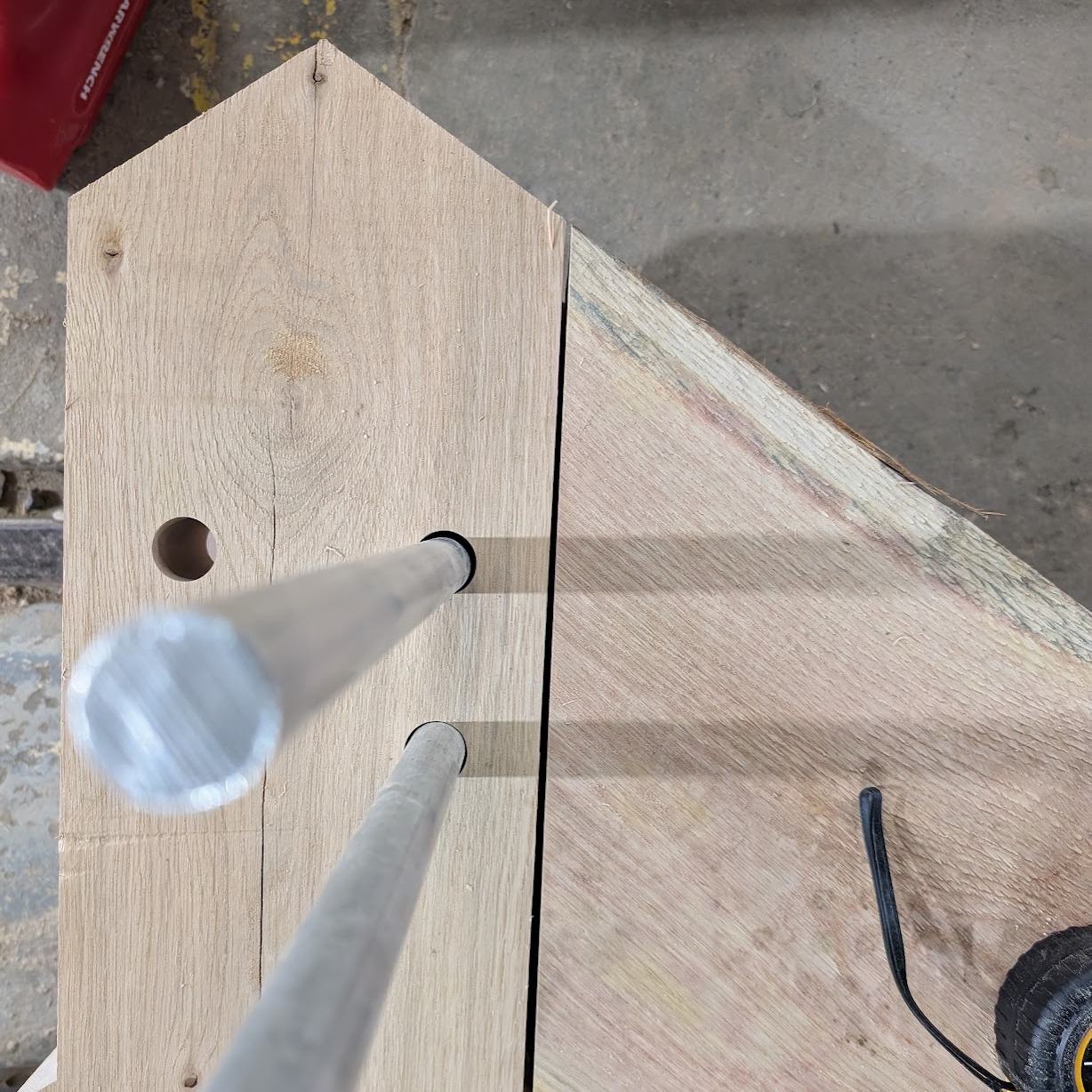
Here, aluminum rods are used to test fit the frame together before shipping. The holes are 1″ in diameter, and the aluminum rods are 7/8 of an inch, so they just fit, but without any difficulty or wear on the joint. They slide right out. The blue flat dollies are placed beneath the timbers to support them and move them around the shop by hand.