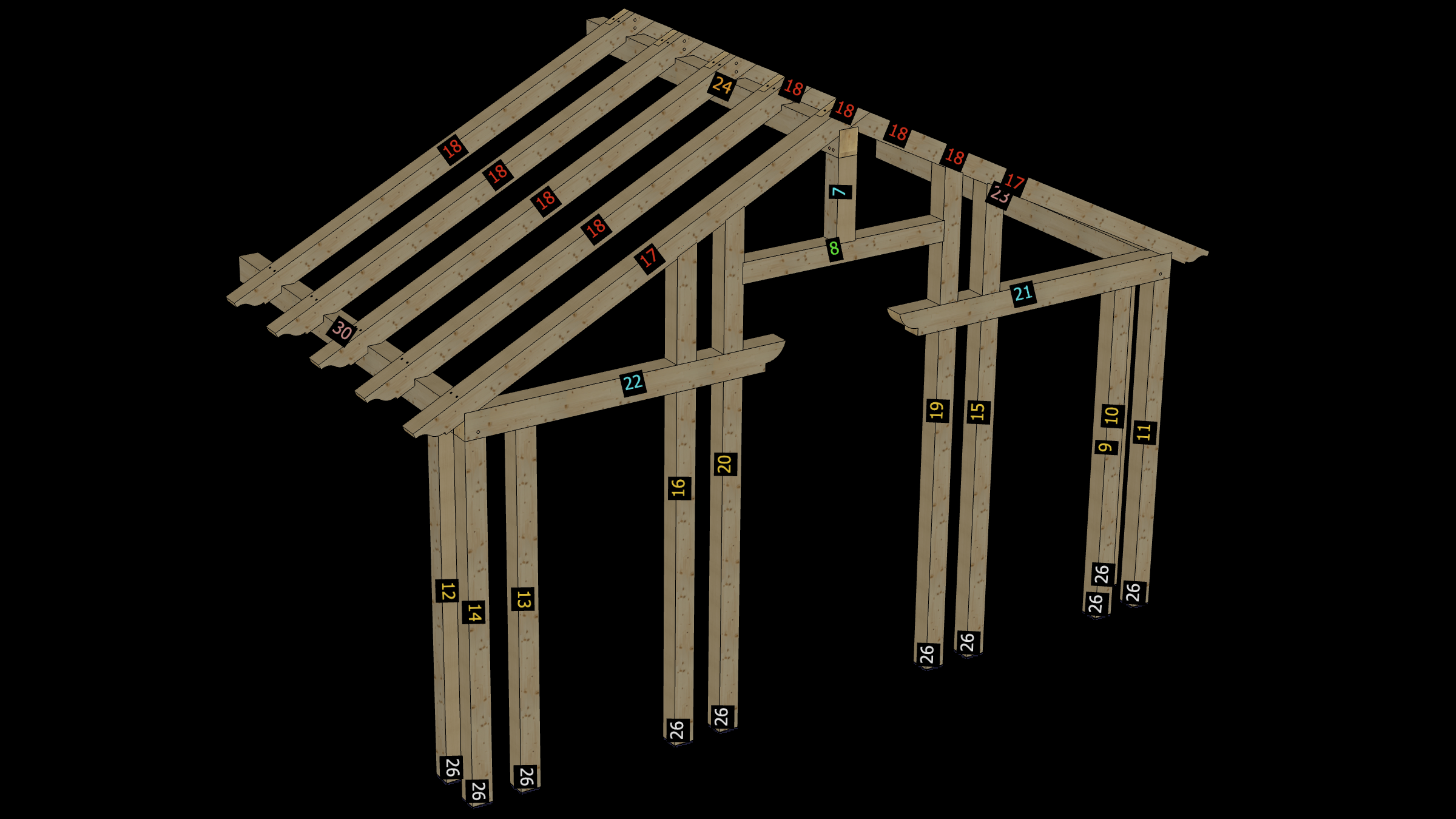
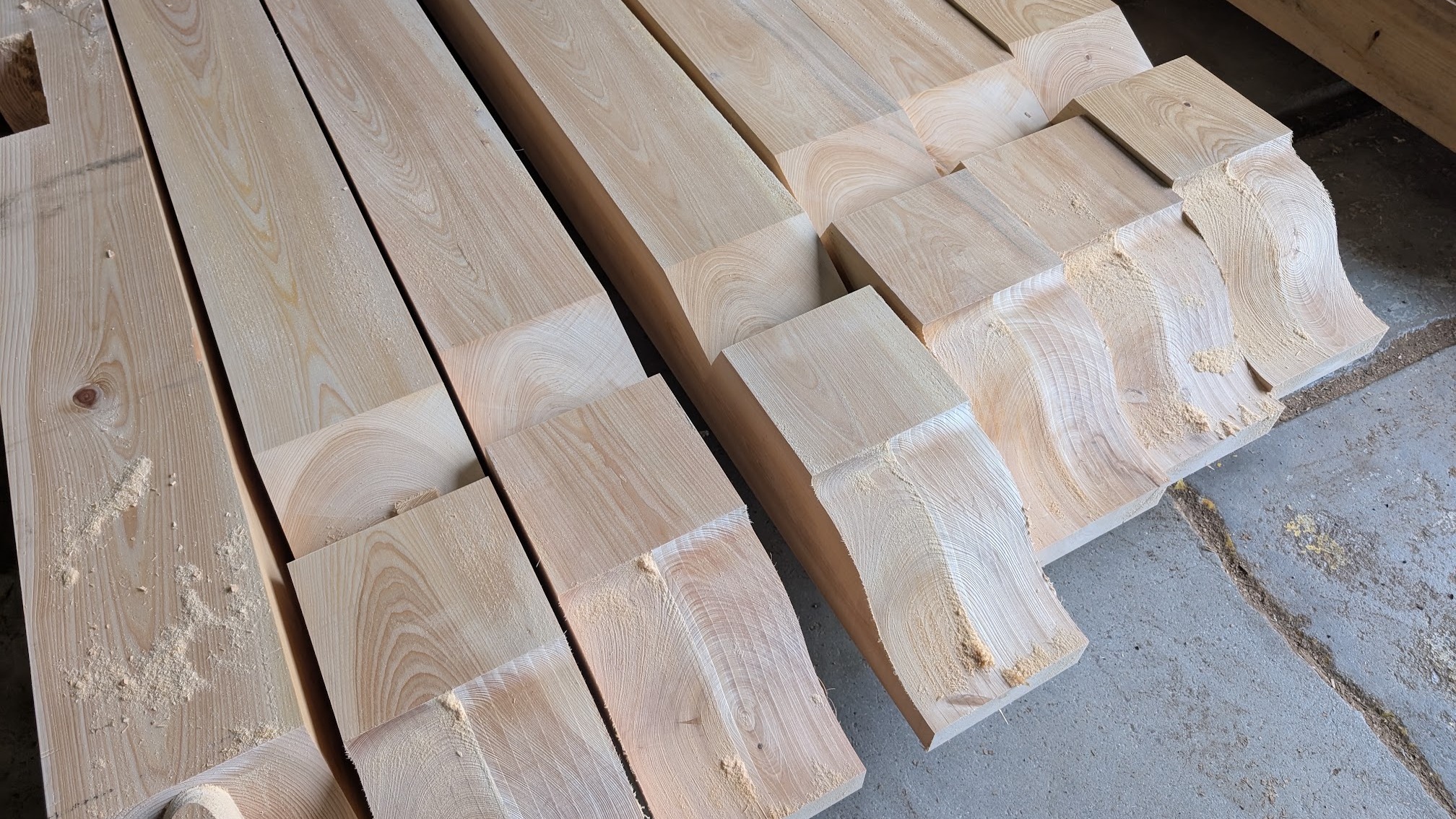
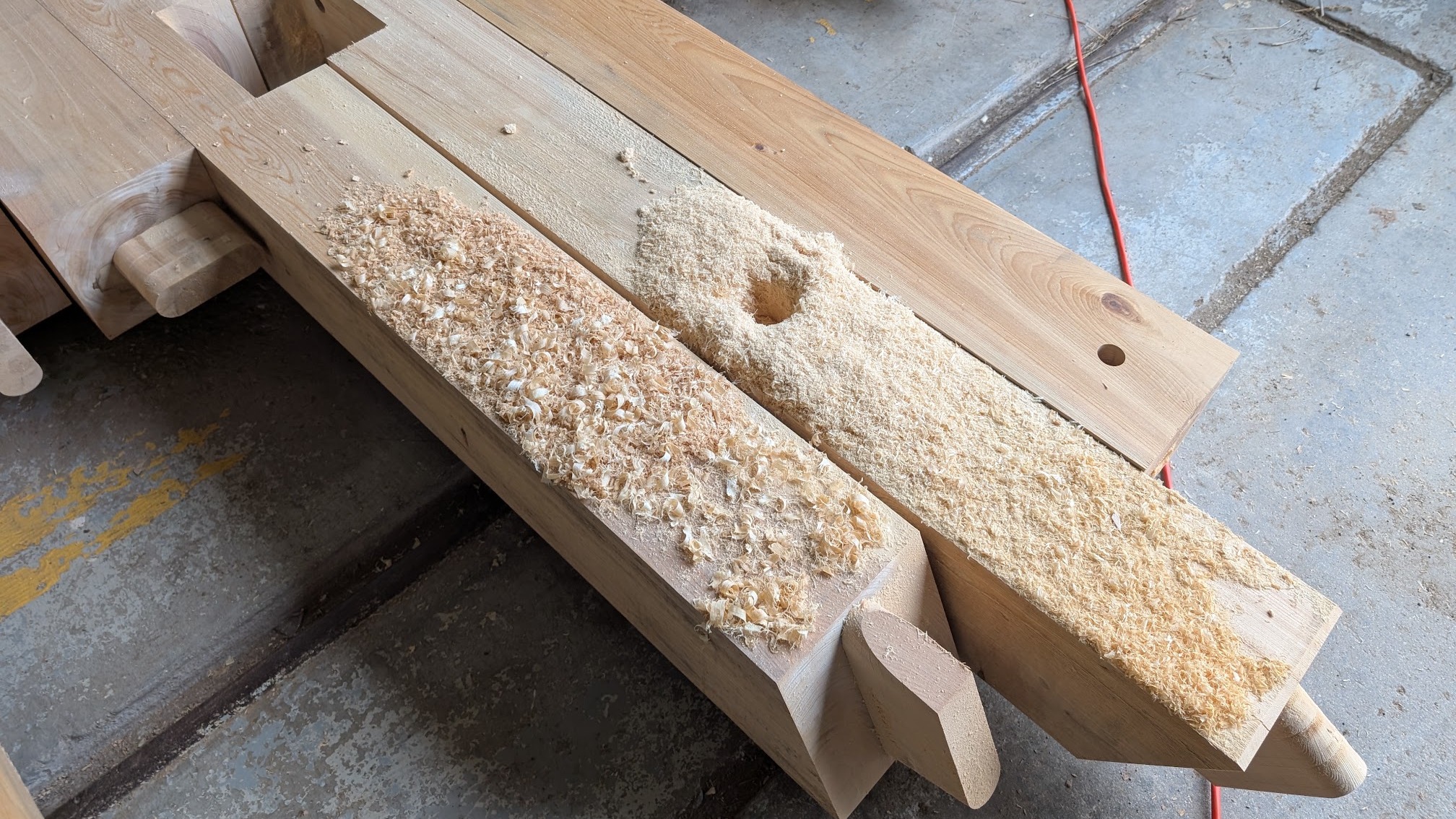
Our first project in cypress: a porch frame with CNC-cut tenons, peg holes and curved decorative brace ends.
This was our first time the shop worked with cypress. It was a privilege to work with this beautiful wood.
For timber framing, Douglas fir is the all-round workhorse. It’s strong for its weight, straight-grained, stable as it dries, and available in long, clear lengths, which gives it top scores in a lot of categories. White oak is heavier, harder, and will last forever, but it also checks heavily as it dries. Oak is much harder on tools as well. Cypress is lighter and softer than both, works easily, and is naturally rot and insect resistant, which makes it good for exposed outdoor structures like pavilions and porches. It can be difficult to source from the sawmills though.
Details
Decorative End Types
The CNC can cut any type of decorative end type. CADWorks has lots of pre-loaded ones, or you can customize your own. If you can trace it out on paper with a single line, it can be done.
A CNC excels at repetitive tasks. Sometimes watching it can get boring, so the operator really has to stay awake. Having two men operate the machine helps a lot.
In the shop
Cutting deep tenons
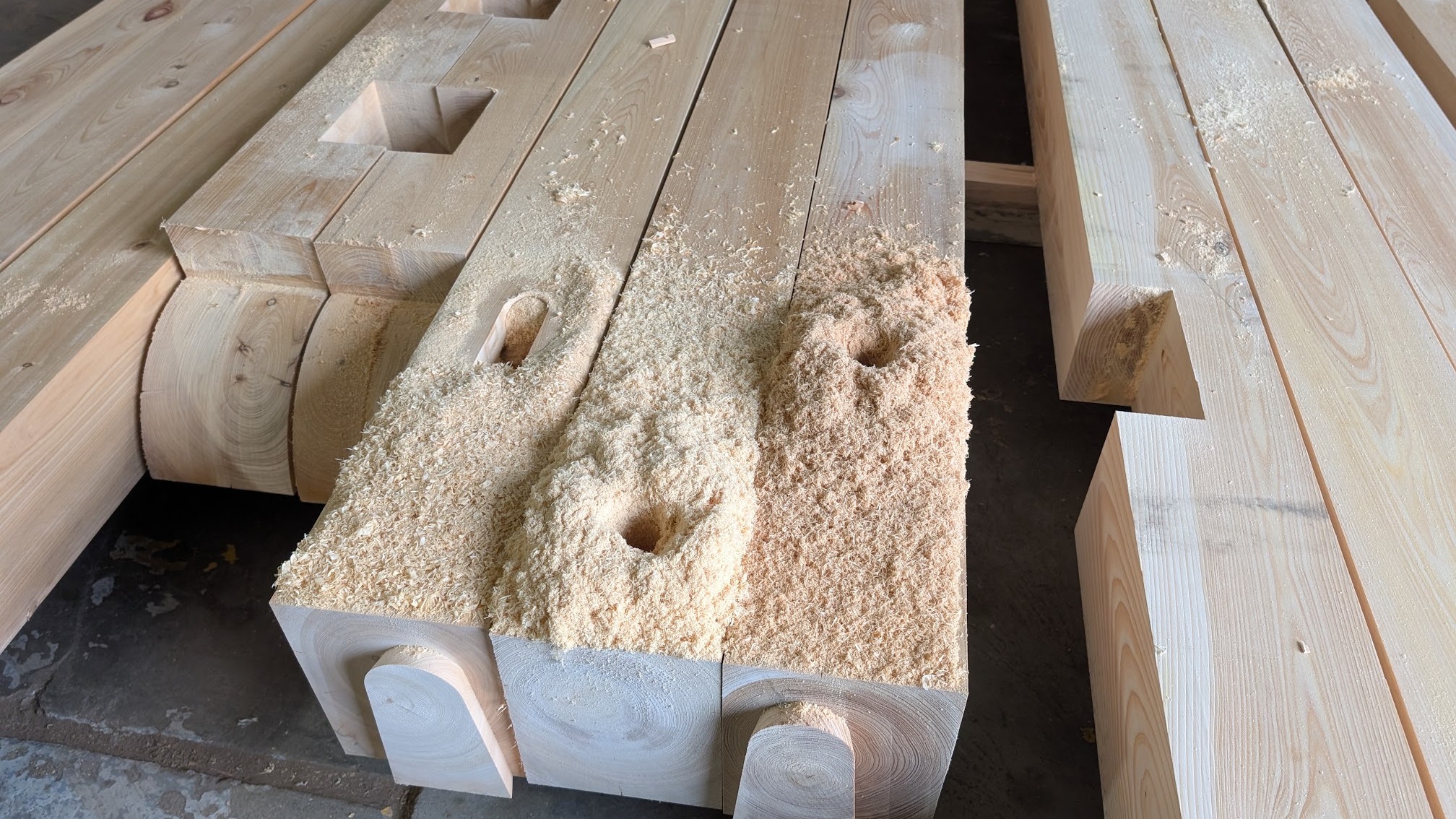
Dealing with sawdust is an art. As the beams come off the CNC, we try hard to keep all the dust “on” the beam as we move it (thus keeping it “off” the CNC which is much harder to clean)! The sawdust is sometimes warm still from the mill.
These deep 4″+ tenons put the most load on the spindle. Having sharp bits is key to running clean. The sawdust is great in the garden and has other uses so it’s not a waste product. Why is some of the dust light and some dark? The answer (which you can’t see) is moisture content. The darker dust is much more wet.
This cypress was very green and surprisingly heavy to work with.
Lesson learned
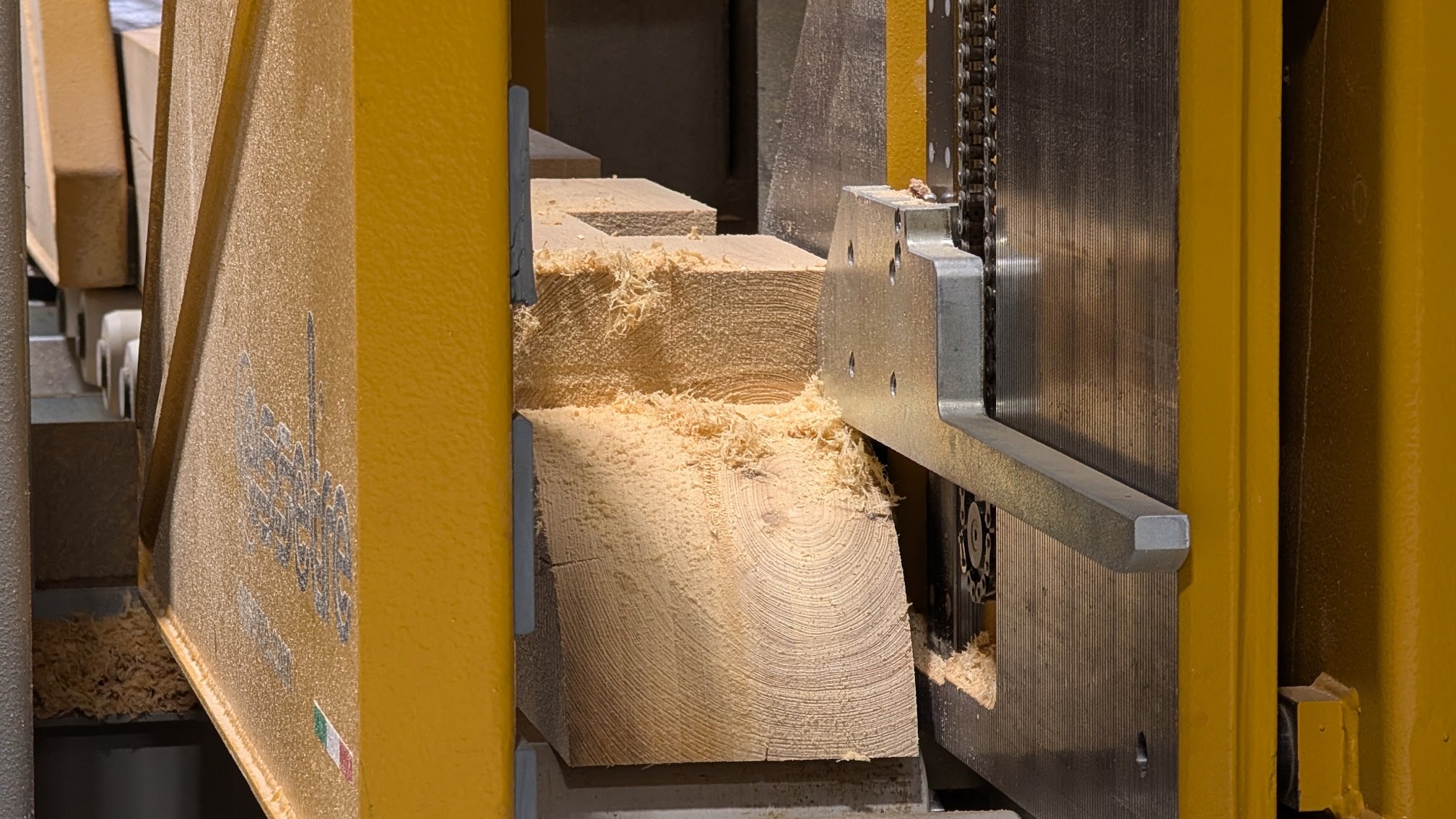
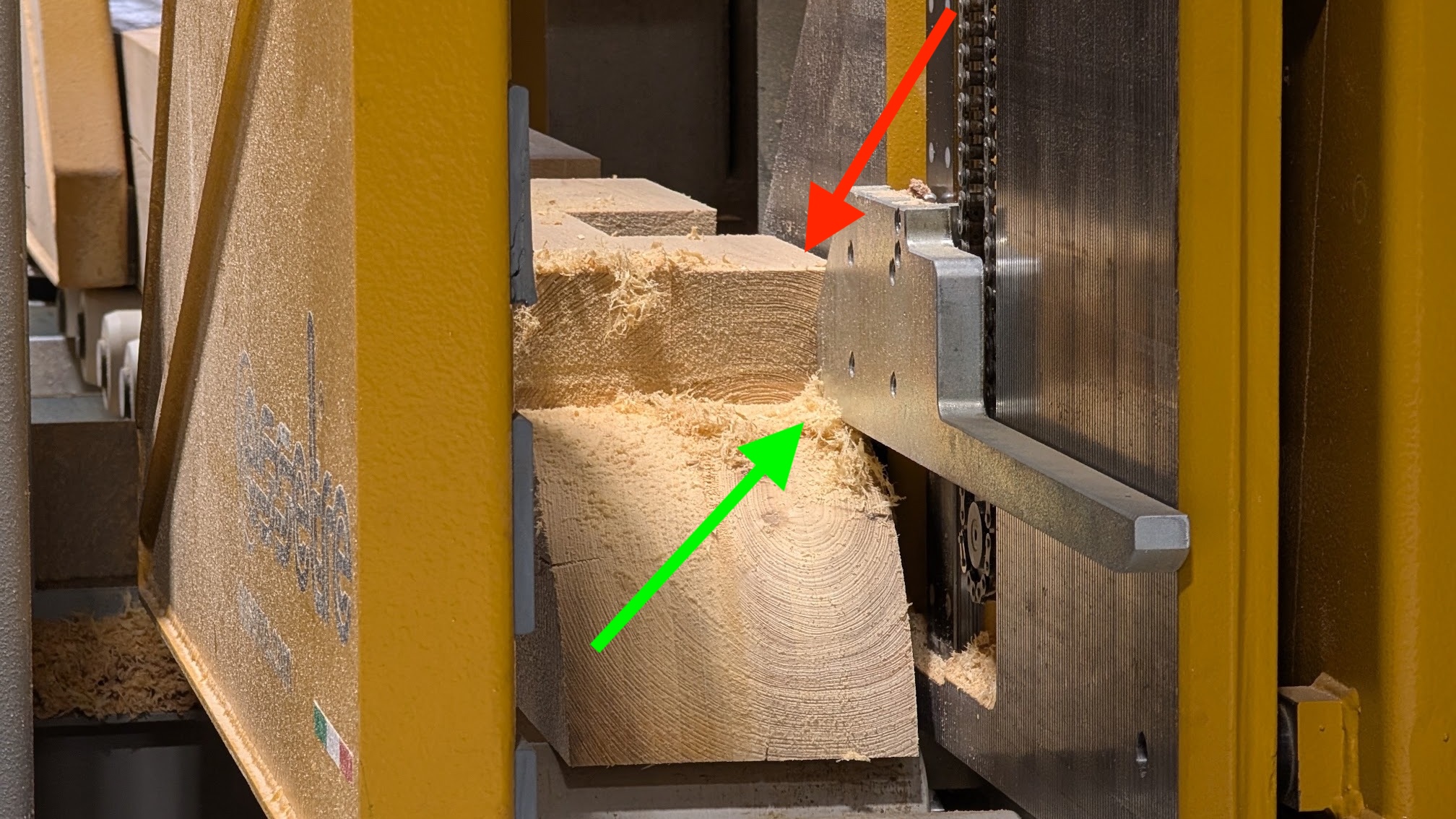
When the clamp misses
We learned a valuable lesson on this one. Here the vertical clamp (silver metal bar) came down to grip the beam. It was expecting to intersect the beam at the height of the beam (in red), but instead found itself too far down (in green). These are the complexities of CNC machining that a shop has to deal with on every build. Thinking through the sequence of each piece, knowing how your machine operates is essential to getting the job done well.