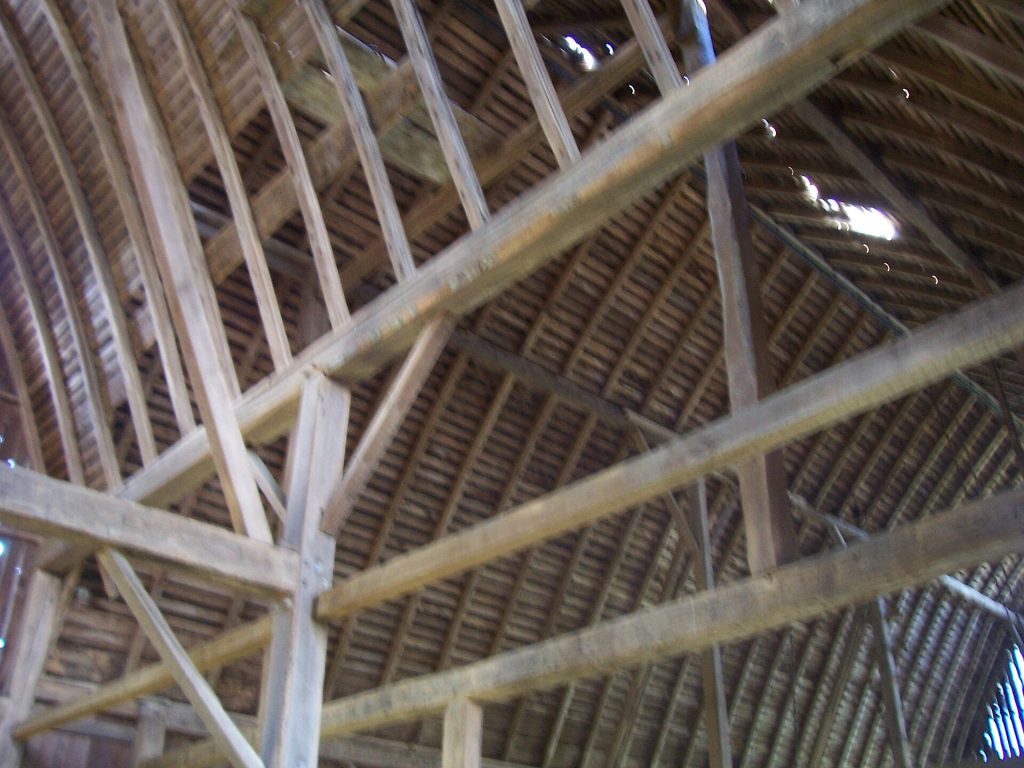
The species we cut most often, from the tree to the finished timber to the frame.
Pine
Eastern white pine (Pinus strobus)
Light, stable and easy to work. A traditional choice for New England frames and a cost-effective option for barns, sheds and outbuildings.
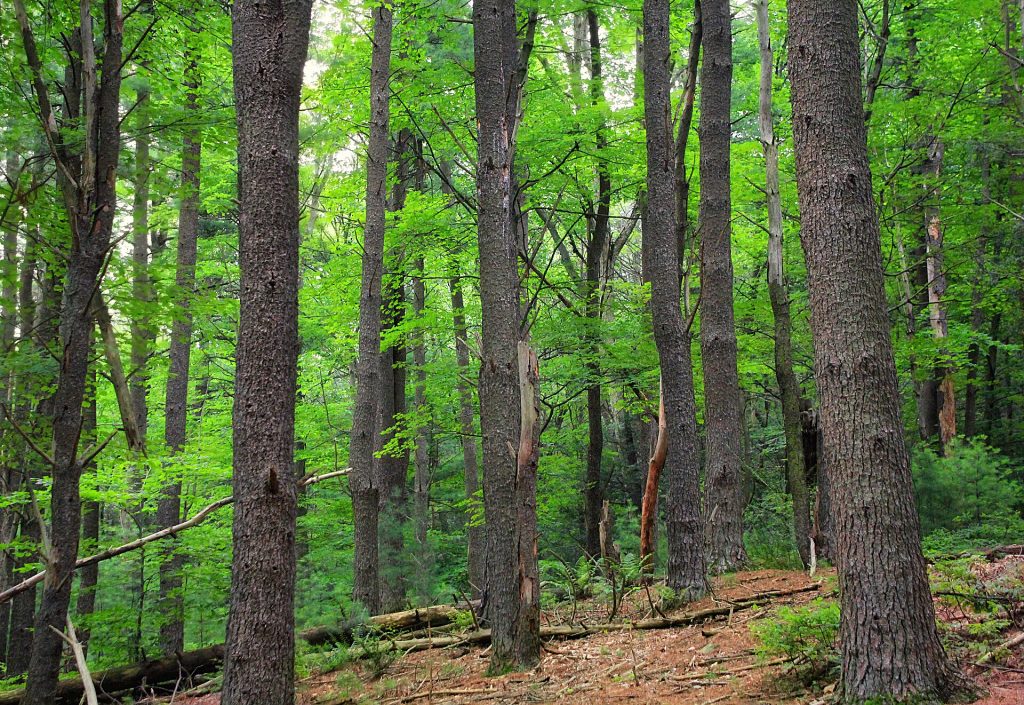
In the forest
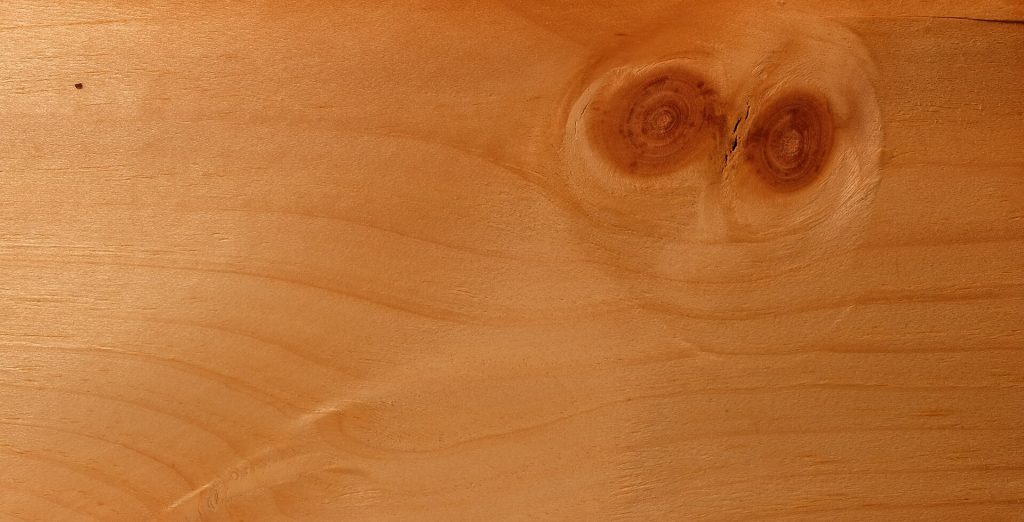
Finished wood
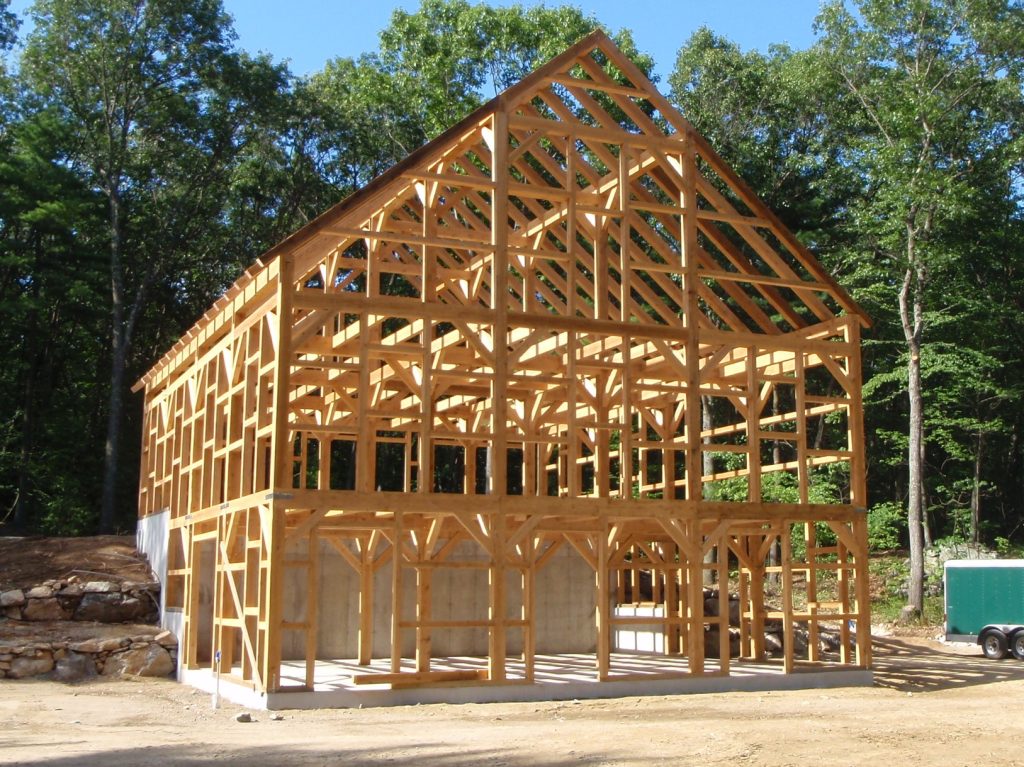
Sample frame
In a timber frame. Eastern white pine is valued for its light weight and dimensional stability. It shrinks and checks less than oak as it dries, so joinery stays tight and the frame is easier to handle and raise. Pine is softer and less stiff than oak or Douglas fir, so members are sized up for longer spans and heavier loads. It takes stain and finish evenly, making it a good fit for bright interiors, barns, sheds and budget-conscious projects.
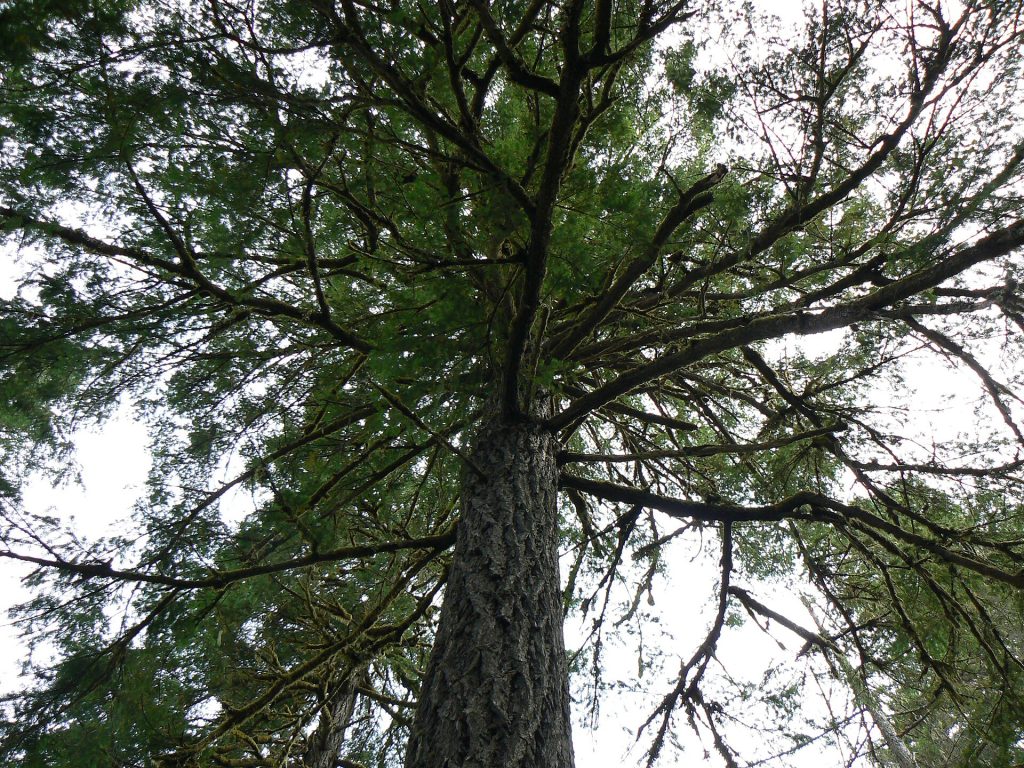
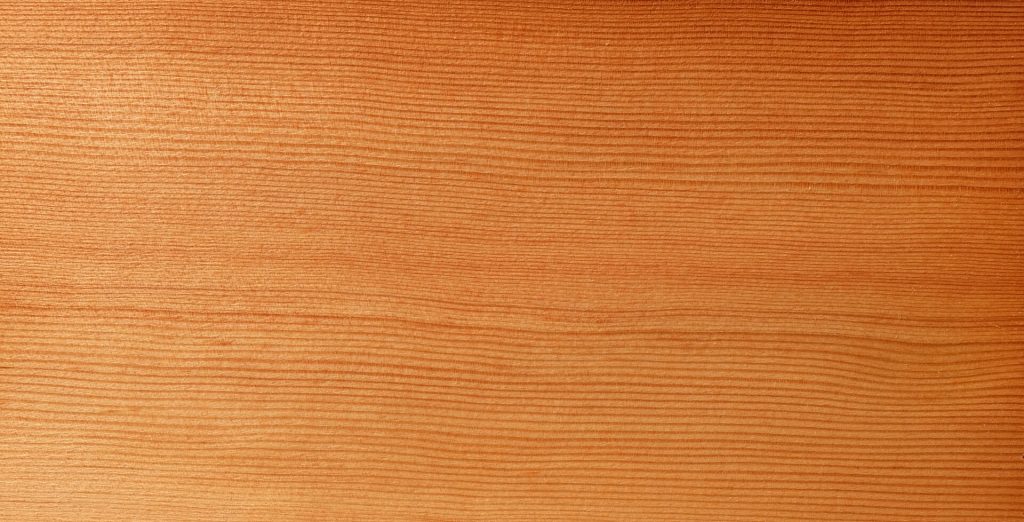
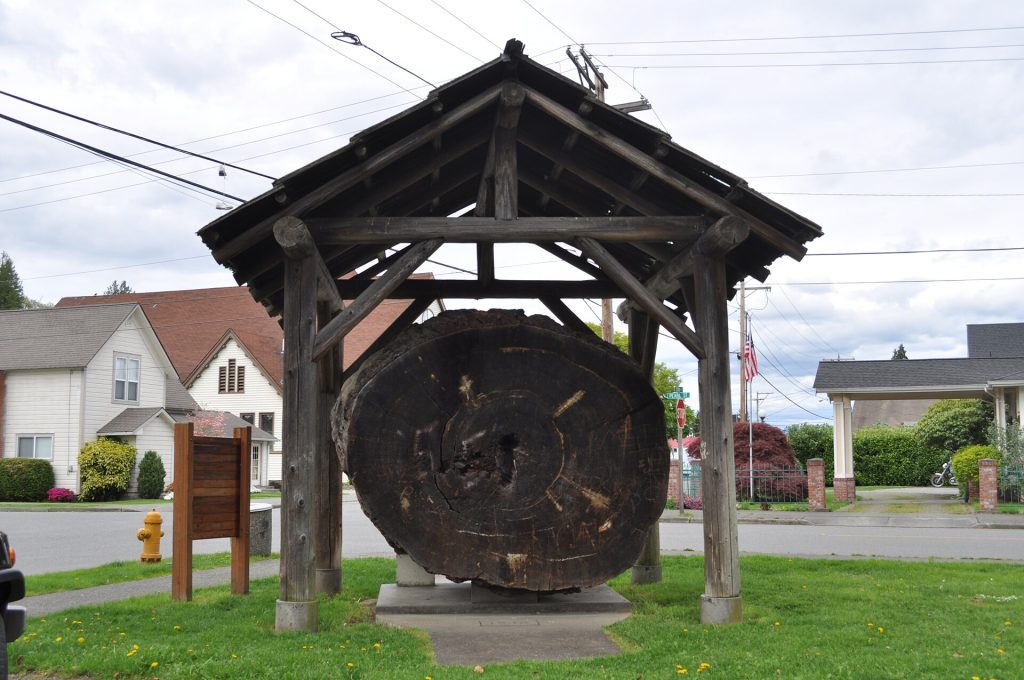
Strong, straight-grained and available in long, clear timbers. The go-to species for big spans, open great rooms and western-style frames.
In the forest
Finished wood
Sample frame
In a timber frame. Douglas fir has one of the best strength-to-weight ratios of any North American softwood, which makes it the workhorse for long tie beams, ridge beams and open great-room spans. It is readily available in long, straight, clear timbers, and kiln-dried or free-of-heart-center stock keeps checking to a minimum. Fir cuts crisply on the CNC, holds joinery well and mellows to a warm reddish tone over time.
Projects We've Cut in Douglas Fir
Douglas Fir projects coming soon.
Cypress
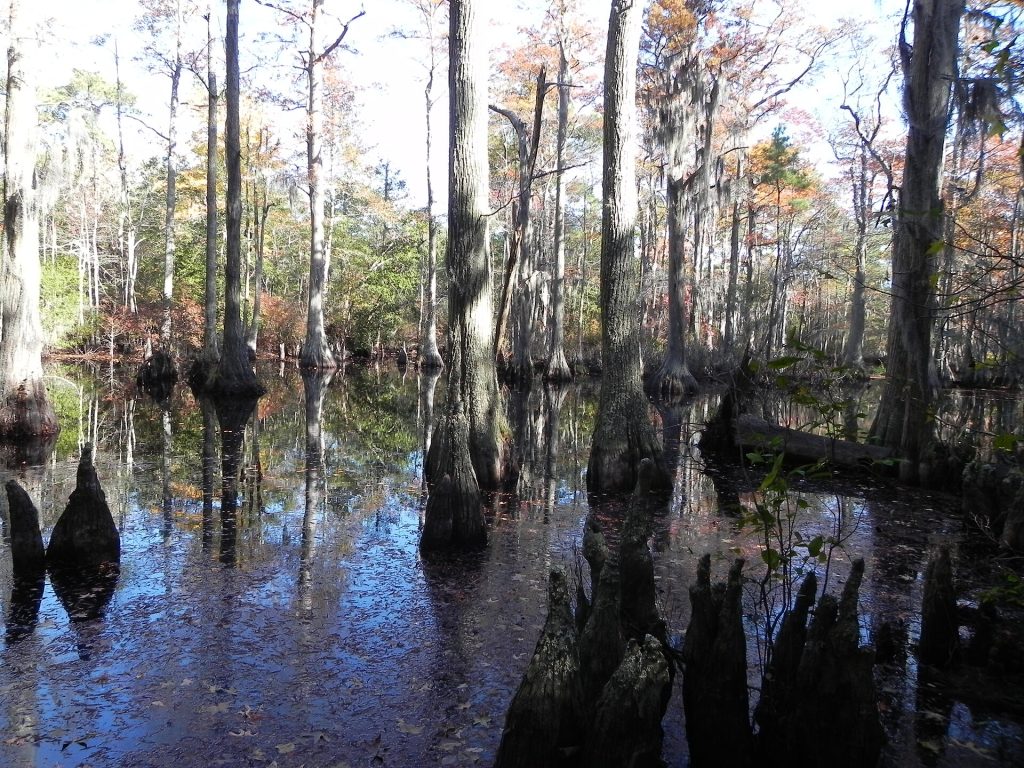
Bald cypress (Taxodium distichum)
Naturally rot-resistant heartwood makes cypress a favorite for pavilions, porches and frames in warm, humid climates.
In the forest
Finished wood
Sample frame
In a timber frame. Bald cypress heartwood contains natural oils that help it resist rot and insects, so it is a strong choice for exposed and outdoor frames such as pavilions, porches, pergolas and boathouses. It is lighter and softer than oak, works cleanly and holds pegs well, though spans are usually more modest than with Douglas fir. Old-growth and reclaimed cypress are prized for their character, while younger second-growth stock varies more in decay resistance.
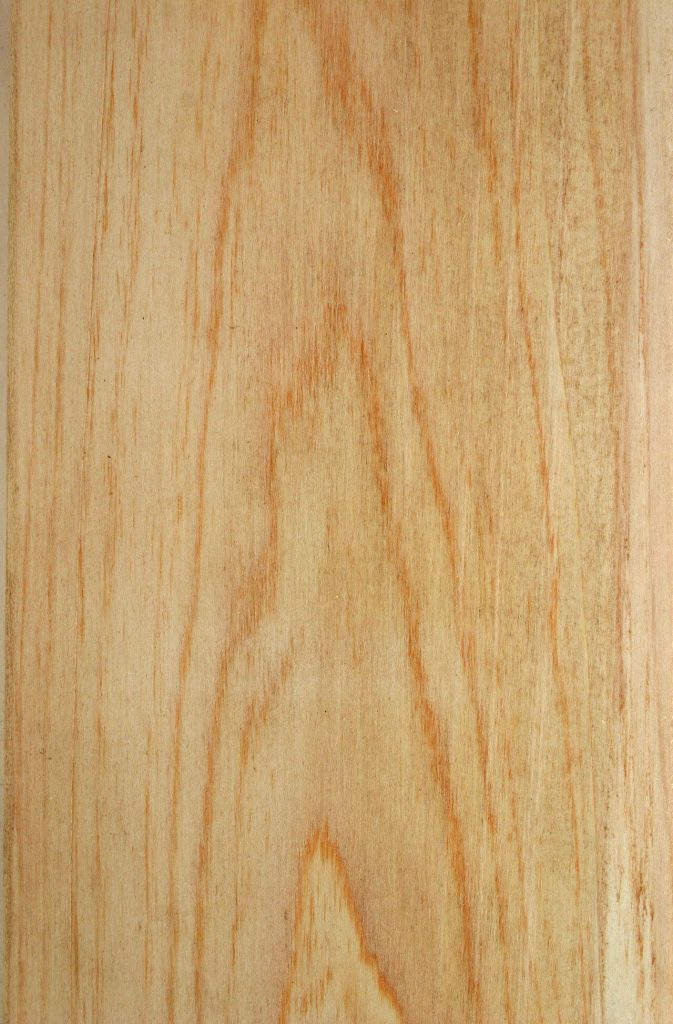
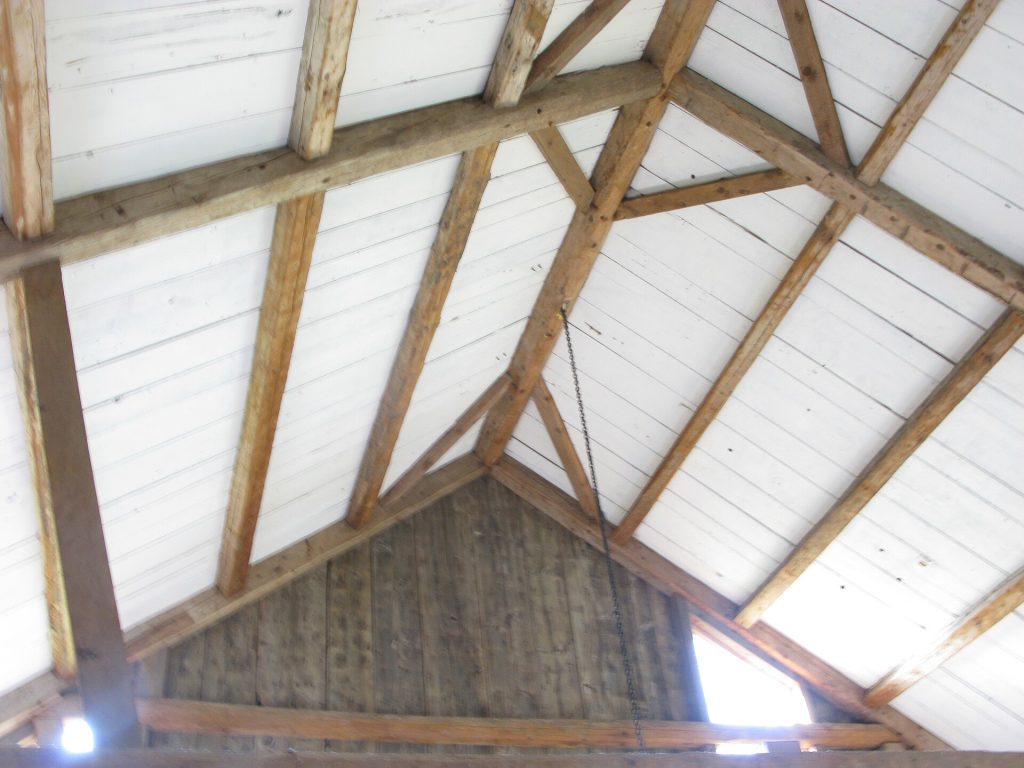
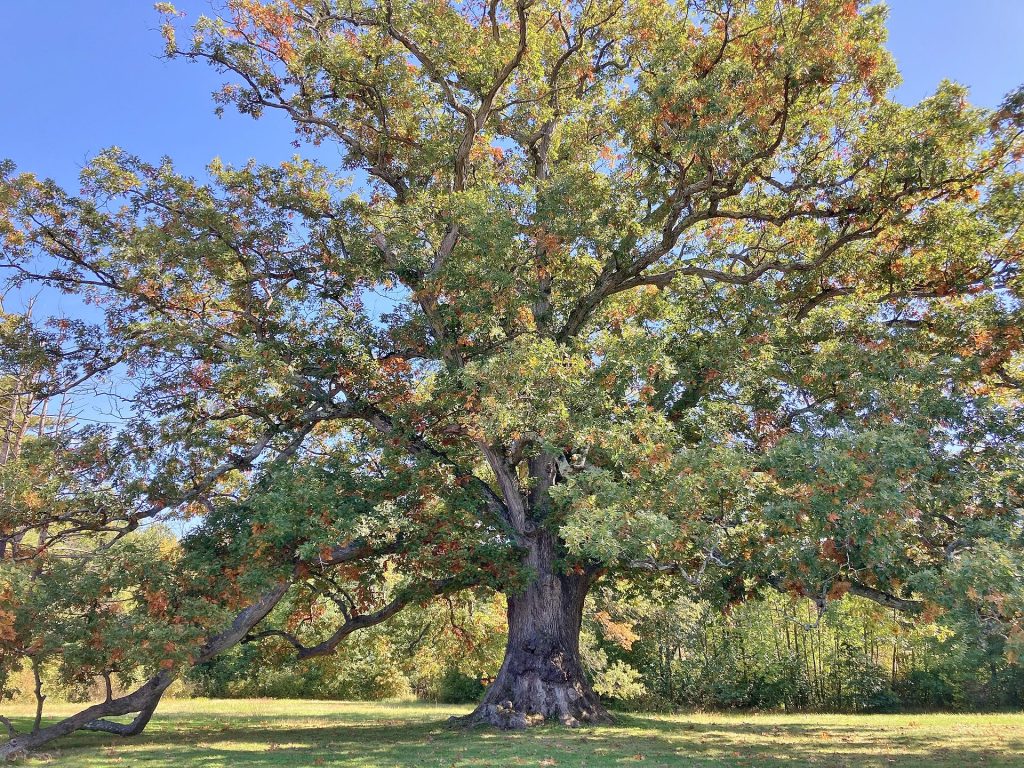
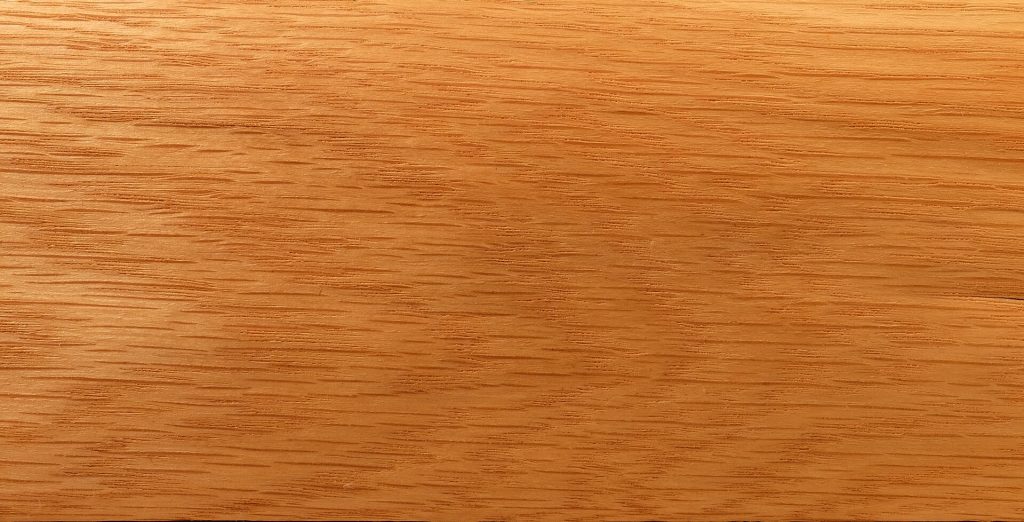
Dense, hard and durable. The classic timber framing species, prized for its strength, its character and how well it holds a peg.
In the forest
Finished wood
Sample frame
In a timber frame. White oak is the traditional timber framing species: dense, stiff and very durable, with closed pores that make it far more rot-resistant than red oak. It is usually worked green, so expect it to shrink and check as it dries; well-cut joinery and oak pegs draw tighter over time. Oak’s weight and strength suit heavy, classic frames, and its bold grain and silver-gray weathering give a frame lasting character.